How often to restring, replace or service your pickleball gear
By Sarah · Updated 2026-07-10
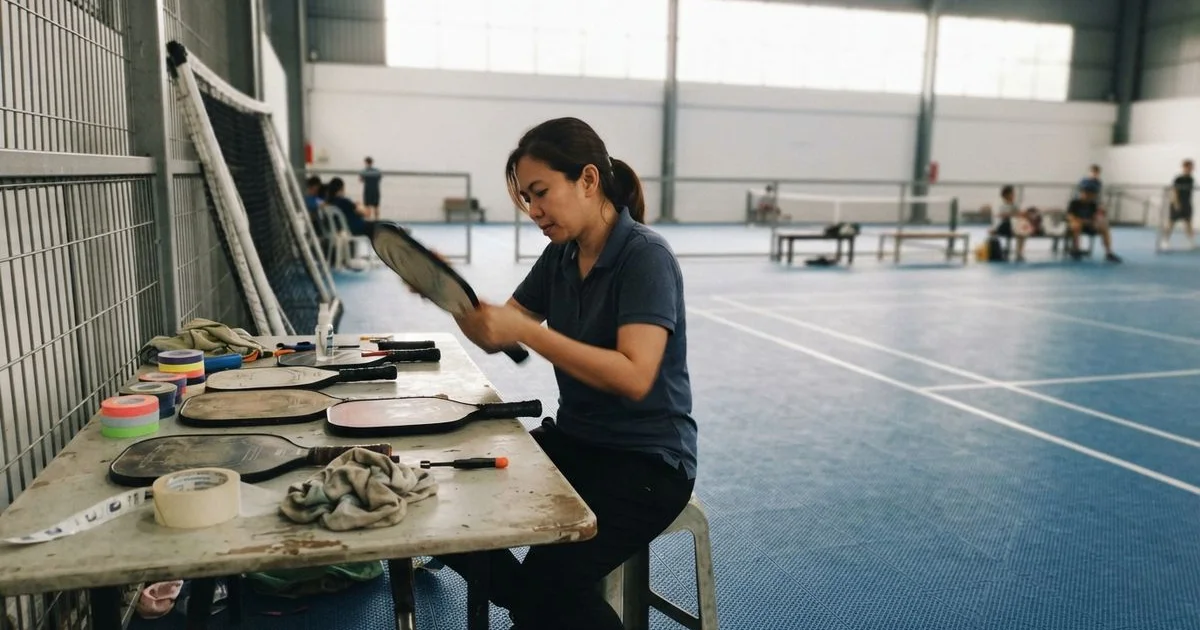
Pickleball gear doesn’t need constant upkeep, but a few components wear out predictably with regular play, and knowing what to check keeps your equipment performing the way it should instead of quietly degrading session by session. This guide covers what actually needs attention and roughly how often.
Your paddle: what wears out and when
Unlike a tennis racquet, a pickleball paddle has no strings to replace. What ages instead is the paddle face and the core beneath it, both of which take a cumulative pounding from repeated ball contact. A paddle played with regularly, several times a week, will typically show noticeable wear within one to two years: a duller sound off the face, less pop on shots, or visible surface wear where the ball makes contact most often.
| Gear item | Typical replacement interval | What signals it’s time |
|---|---|---|
| Paddle | 1-2 years for regular players | Dead sound on contact, visible face wear, reduced control |
| Balls | Every few sessions to a couple months | Cracks, visible dents, reduced bounce consistency |
| Court shoes | 6-12 months for regular players | Worn tread, reduced grip, visible sole wear |
| Grip wrap | Every few months | Slipping, worn smooth, reduced tackiness |
Balls wear out faster than most players expect
Outdoor balls in particular take a beating against hard court surfaces and don’t last as long as their durable appearance suggests. Cracks, small dents, or a ball that no longer bounces consistently are all signs it’s time to retire it, since inconsistent bounce affects your game more than it might seem, especially during precise shots near the net. Outdoor and indoor balls wear differently because they’re built differently in the first place; our indoor vs outdoor court guide covers how the two differ beyond just durability.
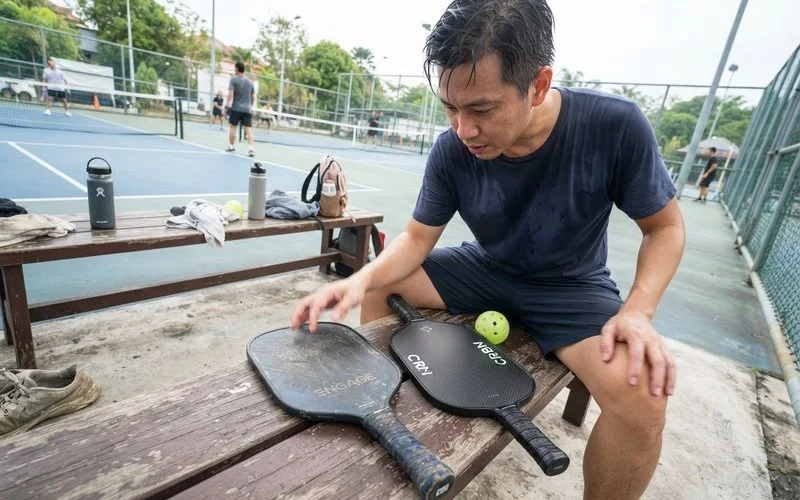
Court shoes matter more than players think
Non-marking court shoes with proper lateral support wear down in the tread faster than most people expect, especially with the frequent side-to-side movement pickleball demands. Worn tread reduces grip, which matters directly for injury prevention, not just performance, since a slip during a quick direction change is a common way ankle injuries happen. Checking the sole every few months, rather than waiting until wear is obvious, is a simple habit worth building.
Storage habits that extend gear life
Heat is the biggest hidden threat to paddle longevity. Leaving a paddle in a hot car, especially in Klang Valley’s climate, can affect the face material and core over time, even if the damage isn’t visible right away. A basic paddle cover and storing it somewhere cool and dry between sessions is a small habit that meaningfully extends how long a paddle performs well.
When maintenance isn’t enough
Some wear can’t be fixed with care alone, and once a paddle’s face feels noticeably dead or its edges show cracking, replacement is the only real fix. The same goes for court shoes once the tread is visibly smooth, since no amount of careful use restores lost grip.
A simple gear check routine
Rather than waiting for a problem to show up mid-game, a quick check every few weeks catches most issues early. Look over your paddle’s face and edges for cracks or unusual wear, check your shoe tread by running a finger across the sole to feel how much grip pattern remains, and glance at your grip wrap for smoothness or slipping. None of this takes more than a couple of minutes, and catching wear early means replacing gear on your own schedule rather than being forced into it mid-season.
How often you play changes everything
All of the intervals in this guide assume fairly regular play, several sessions a week. A more casual player, on court once a week or less, will naturally stretch these timelines out considerably, since wear is driven by actual use rather than time passing on a calendar. The more useful habit than tracking a fixed replacement schedule is simply paying attention to how your gear feels and performs each time you play, since that tells you more than any general timeline can.
If you’re ready to replace or upgrade gear, browse pro shop and equipment providers across Klang Valley to compare what’s available near you. For everything else in the directory, start from the home page, and see our ranking methodology for how we score equipment providers.
FAQ
- How often should I replace a pickleball paddle?
- For a regular player, roughly every one to two years is common, though this varies widely based on how often you play and how the paddle is stored and cared for. Signs like a dead-sounding hit or visible face wear are better indicators than a fixed timeline.
- Do pickleball paddles need restringing like a tennis racquet?
- No. Pickleball paddles are solid-faced, not strung, so there's no restringing involved. What wears out instead is the face material and core, which degrade with repeated impact over time.
- How often should court shoes be replaced?
- Court shoes typically need replacing every six months to a year for a regular player, depending on frequency of play. Worn tread reduces grip and increases injury risk, so check the sole regularly rather than waiting until it's visibly bald.
- How should I store my paddle to make it last longer?
- Avoid leaving it in a hot car or direct sun for long periods, since heat can affect the face material and core over time. A paddle cover and a cool, dry storage spot help it hold up longer.