How to get your family started with pickleball in Klang Valley
By Sarah · Updated 2026-07-05
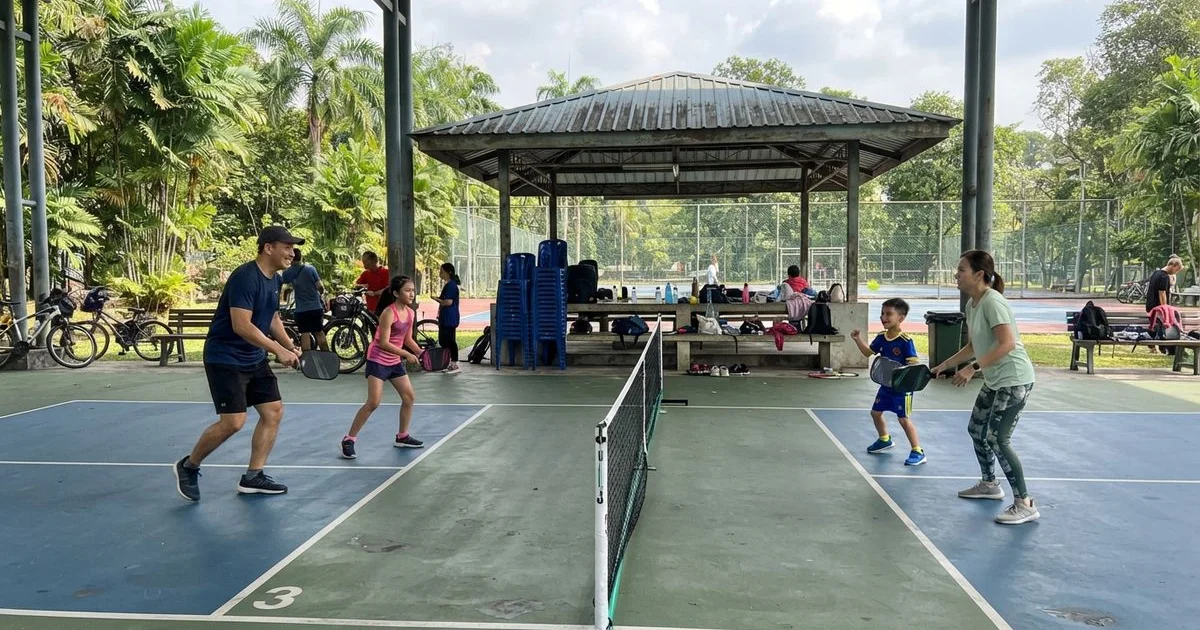
Pickleball’s small court and forgiving pace make it one of the easier sports for a family spanning several generations to actually play together, not just watch each other play. This guide covers how to introduce kids, and get grandparents and grandkids on the same court without either end of the age range being left out.
Why pickleball works across generations
The court is roughly a third the size of a tennis court, and doubles is the standard format, which means less ground to cover per player and more emphasis on placement and reaction than raw speed or power. That combination is exactly what makes it realistic for a ten-year-old and a grandparent to share a court and both genuinely enjoy the game, something that’s much harder in sports built around running distance or physical power.
Getting kids started
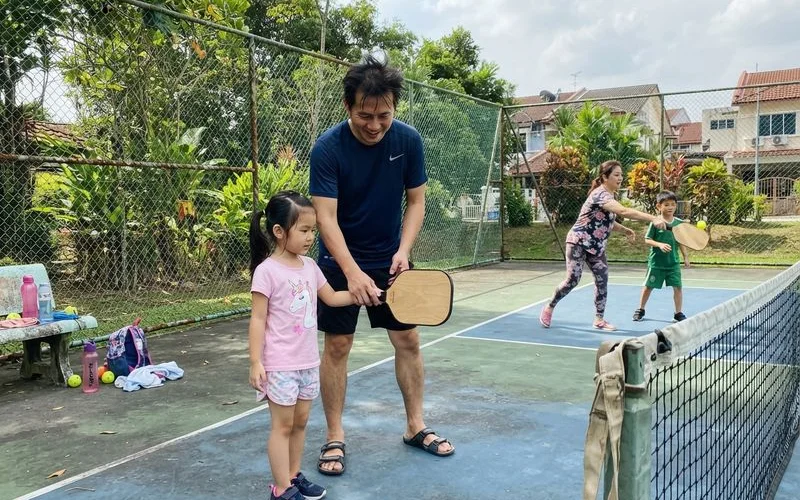
- Start with a lighter, smaller paddle. Full-size adult paddles are often too heavy and awkward for younger kids to control comfortably.
- Focus on rallying before scoring. Simple back-and-forth games build hand-eye coordination and confidence before introducing full match rules.
- Keep sessions short. Younger kids lose focus faster than adults; 20 to 30 minutes of active play is often plenty for a first few sessions.
- Make it social, not competitive, early on. Rotating partners and celebrating good rallies rather than just points won keeps the mood light while skills develop.
Playing across three generations
| Pairing | What makes it work |
|---|---|
| Parent + child | Parent covers more court, child focuses on simple returns near the net |
| Grandparent + grandchild | Doubles format shares court coverage; slower pace suits both |
| Mixed family doubles | Rotating partners keeps games balanced and fun for everyone |
The key adjustment for a mixed-age family game is simply agreeing on pace and intensity before you start. A relaxed, social game with generous line calls and no pressure to win works far better for family time than a competitive match where the age gap becomes the story of the day.
Finding a family-friendly venue
Weekend afternoon slots tend to draw a more relaxed, social crowd than weekday evenings, which are often busier with regular competitive players. Some venues run sessions explicitly aimed at families or beginners, so it’s worth calling ahead to ask, especially if you’re bringing young kids for the first time and want a lower-pressure environment.
Building it into a family routine
Families who stick with pickleball long-term usually treat it as regular time together rather than a one-off outing, a monthly or fortnightly session that everyone can plan around. It’s also a low-cost way to spend active time together across generations, since court fees split across a family group are modest per person.
Handling different skill levels within one family
It’s common for a family to have a wide skill spread, a teenager who’s picked it up quickly, a parent playing casually, and a grandparent just starting out. Rather than forcing everyone into evenly matched games, mixing a stronger and weaker player on each doubles team usually produces more balanced, enjoyable matches than pairing similar skill levels against each other. It also means the more experienced family member naturally ends up coaching a little during play, which most families find is a nice side effect rather than a chore.
Keeping younger kids engaged over time
Interest from younger kids can fade if every session looks the same. Simple variations, like short mini-tournaments within the family, switching up doubles partners each game, or turning practice into a friendly points challenge, keep it feeling fresh. It’s also worth letting a child’s interest guide the pace; some kids want to move quickly into full scoring and real games, while others are happy rallying casually for months before caring about the score at all, and both are fine starting points.
Browse courts across Klang Valley to find a venue with weekend availability near you, and see our ranking methodology for how we score facilities on things like accessibility and beginner-friendliness.
FAQ
- What age can kids start playing pickleball?
- Many kids can start around 6 to 8 years old with a lighter, smaller paddle and simplified rules, though readiness varies by child. Younger kids often enjoy simple rallying games before moving to full scoring.
- Can grandparents and grandkids realistically play together?
- Yes, and it's one of the sport's genuine strengths. The smaller court and doubles format let players of very different ages and fitness levels share a game without either side being overwhelmed.
- Do venues in Klang Valley offer family-friendly sessions?
- Some do, particularly on weekend afternoons, though it's worth calling ahead to confirm since not every venue markets a session specifically as family-friendly.
- What's the easiest way to keep young kids interested early on?
- Short, simple games focused on rallying rather than full scoring keep it fun without frustration. Switching partners often and celebrating good rallies, not just points won, helps keep the mood light.