Common pickleball injuries and how to prevent them
By Sarah · Updated 2026-07-03
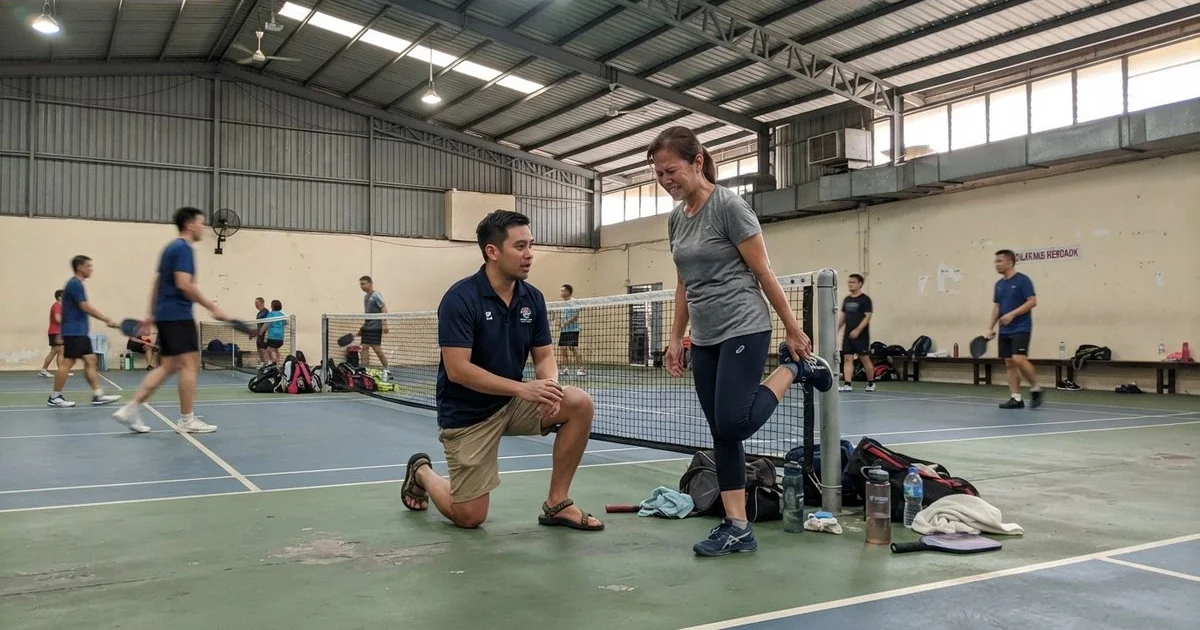
This is general safety information, not medical advice. If you’re injured or have a health condition that might affect your ability to play safely, check with a doctor before returning to court.
Pickleball’s reputation as a gentler sport is mostly deserved, but it’s not injury-free. The quick, unpredictable lateral movement and repetitive arm motion create real strain patterns, and knowing what they are ahead of time is the easiest way to avoid them. This guide covers the injuries that come up most often and what actually helps prevent them.
The most common injuries
- Ankle sprains. Quick side-to-side movement and sudden direction changes near the kitchen line are the usual cause, especially on courts with uneven surfaces.
- Pickleball elbow. The same tendon irritation behind tennis elbow, caused by repetitive wrist and forearm motion during shots, particularly if grip or technique is off.
- Shoulder strain. Overhead shots and repeated serving motion can irritate the shoulder, especially for players returning to activity after a long break.
- Lower back strain. Bending and lunging for low shots without proper form puts strain on the lower back over a long session.
- Knee strain. Sudden stops and pivots put load on the knees, particularly for players without a warm-up routine.
Why these injuries happen
Most pickleball injuries trace back to one of two causes: insufficient warm-up before quick, unpredictable movement, or repetitive strain from technique issues that go uncorrected over many sessions. Court surface condition plays a role too. Uneven surfaces and net or line issues, which do come up in feedback on some outdoor courts, add real risk to the quick footwork the sport demands.
| Injury | Common cause | Prevention habit |
|---|---|---|
| Ankle sprain | Quick lateral movement, uneven surface | Proper footwear, court awareness, warm-up |
| Pickleball elbow | Repetitive wrist motion, poor grip technique | Correct grip, gradual increase in play volume |
| Shoulder strain | Overhead shots, serving motion | Shoulder mobility warm-up, technique check |
| Lower back strain | Poor form on low shots | Bending at the knees, not the back |
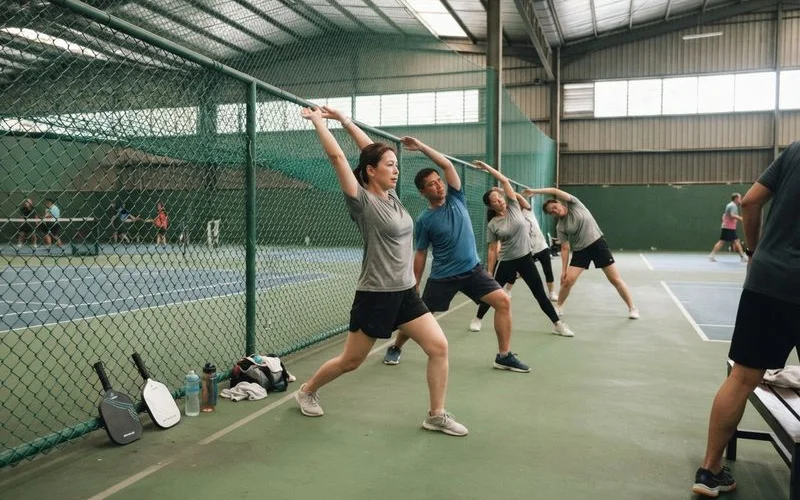
Warm-up habits that actually help
A short, dynamic warm-up before playing, five to ten minutes of light cardio followed by mobility movements for the ankles, shoulders and hips, prepares your body for the quick, unpredictable movement pickleball demands. Static stretching before play is less useful than dynamic movement; save the deeper stretches for after your session, when muscles are already warm.
Technique adjustments that reduce strain
Correcting grip and swing mechanics early prevents a lot of overuse injury before it starts. Bending at the knees rather than the back when reaching for low shots protects your lower back over a long session. And pacing yourself, especially if you’re returning to the sport after time away, gives your body a chance to adapt before ramping up to multiple sessions a week.
When to see a doctor
Sharp pain, rapid swelling, or an inability to bear weight or grip a paddle normally are signs worth getting checked rather than playing through. Most minor strains improve with rest, but pushing through a real injury tends to make recovery longer, not shorter.
Building recovery into your routine
Injury prevention doesn’t stop when the game ends. Basic recovery habits, cooling down with light stretching after a session, staying hydrated, and giving your body at least a day of rest between intense sessions if you’re playing several times a week, all reduce the cumulative strain that leads to overuse injuries over time. Players who ramp up from occasional to frequent play too quickly are especially prone to this, since the body needs time to adapt to a new level of activity. Heat is its own separate risk factor worth planning around; see our guide to playing safely in the heat for how to pace a session on a hot, humid day.
Court condition and your own risk
Beyond your own technique and warm-up, the court itself plays a real role in injury risk. An uneven surface, a net that’s set incorrectly, or poor lighting that makes it harder to track the ball all add avoidable risk on top of the sport’s normal demands. If you’re choosing between venues and injury prevention is a priority, facility upkeep is worth weighing alongside price and location, not treated as an afterthought.
Browse courts across Klang Valley to find venues with well-maintained surfaces, and see our ranking methodology for how facility condition factors into how we score each listing.
FAQ
- What is the most common pickleball injury?
- Ankle sprains and lower-leg strains from quick lateral movement are among the most frequently reported pickleball injuries, along with overuse issues in the elbow and shoulder from repetitive paddle motion.
- What is pickleball elbow and how is it different from tennis elbow?
- Pickleball elbow refers to the same underlying tendon irritation as tennis elbow, caused by repetitive wrist and forearm motion. It's common in pickleball because of how frequently players hit shots compared to some other racquet sports.
- Can a proper warm-up actually reduce injury risk?
- Yes. A short warm-up that includes light cardio and dynamic stretching prepares muscles and joints for quick, unpredictable movement, which is a meaningful part of reducing strain-related injuries in any racquet sport.
- When should a pickleball injury be seen by a doctor?
- If pain is sharp, swelling appears quickly, or you can't bear weight or grip a paddle normally, treat it as worth a medical evaluation rather than trying to play through it.